Trees and their Fungi – December 2017
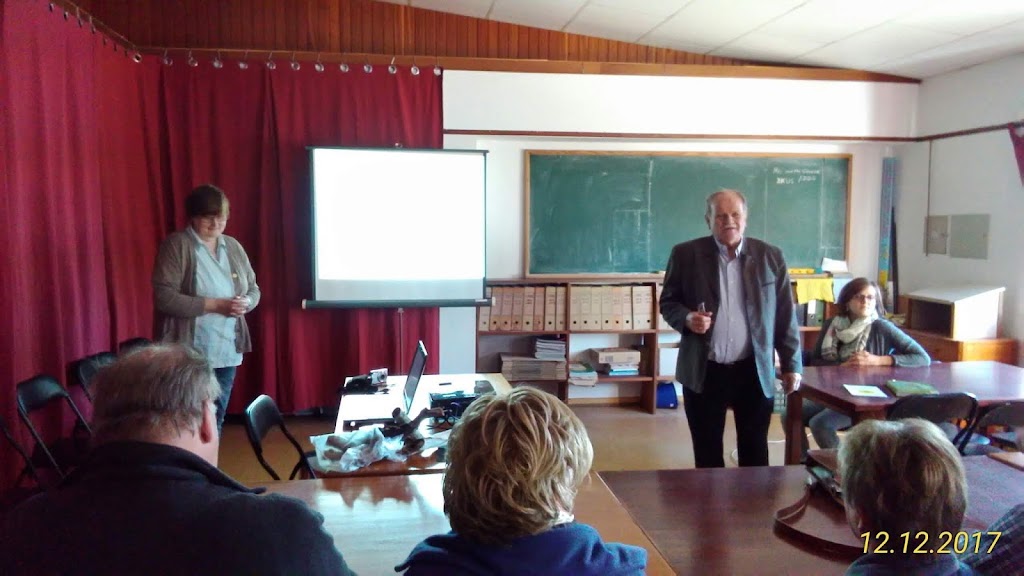
We were lucky to have Herr and Frau Gronek, two experts in trees and their fungi, giving us an illustrated talk at the Quinta da Figueirinha in Silves on Tuesday December 12th. The talk was on The Caring and Cutting of Trees and Their Interaction with Fungi / Bäume: Ihr Schnitt, ihre Plege, und ihre Interaktion mit Pilzen. Frau Gronek spoke about the cutting and care of trees, Herr Gronek about fungi. The talk and supporting information were in German and English. After the talk, we took a tour around the Quinta looking at examples that illustrated the topic of the talks.
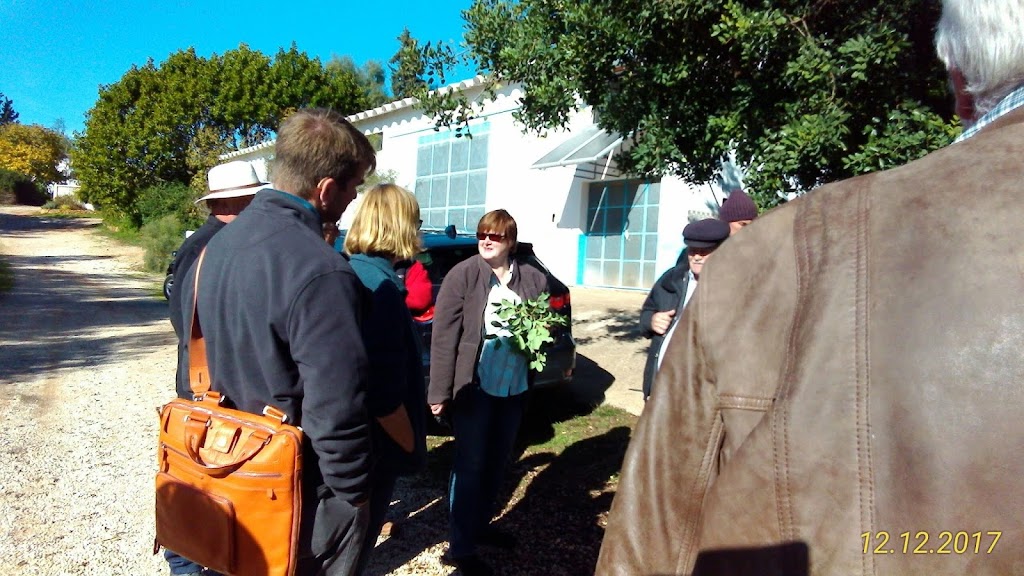
|
| Frau Gronek opens the talk |
Todays presentation was interesting but on a more theoretical and principal background of tree growth mechanisms. The different layers of a Tree/a branch were shown, where is living and growing and regenerating tissue and where is dead but nevertheless necessary wood. The difference of length and thickness growth was shown as well as its relationship to carbon storage. From this theoretical understanding of tree growth pruning thechniques were derived without going into detail for specific trees.
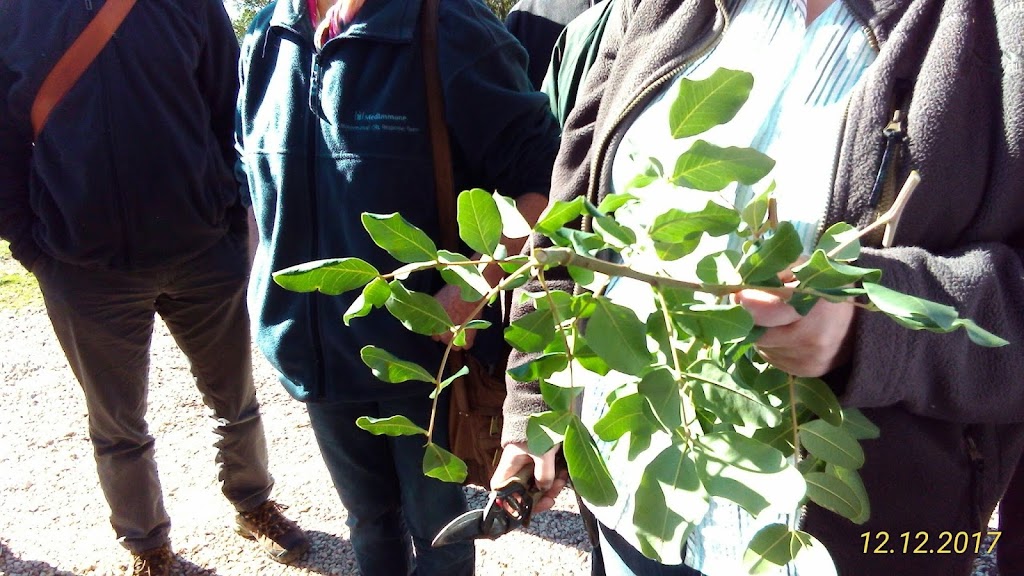
We were shown examples of correct and incorrect pruning of small and big branches on trees on the quinta. I did not agree with everything the referee said but there were a lot of interesting and new informations. The most important thing is to respect and not to disturb the self repair mechanisms of a tree when it loses a branch naturally or when it is pruned artificially. In a correct cut or a naturally shed branch the tree will completely close the scar within a relatively short time with some kind of callus. What I concluded for myself is to find the best compromise to cut a branch as close to the trunk or main branch as possible but at the same time keeping the diameter of the cut as small as possible. If the stump left after the cut is too long it cannot be covered with callus, will die off and will be an entry point to fungi. But if the branch is cut too close to the bifurcation the wound will become unnesesarily large and, even worse, the cut destroys the zone auf auto-regeneration which exists at the base of every branch. These zones were new to me and were clearly shown in many examples and I can show them to you when we meet next time. These zones are more pronounced on branches that the tree will eventually shed itself. Literally translated they are called ‘fairwell collar’, Abschiedskragen.
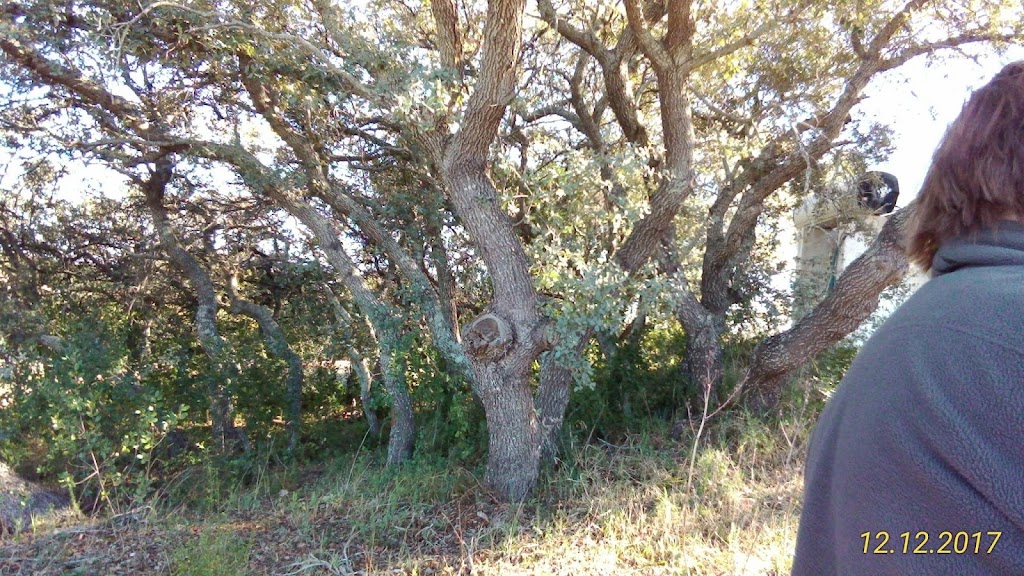
The referee also explained the hierarchy of a tree crown and the canopy of a forest. Growth is controlled by plant hormones, but also by availability of light and also by the ability of the roots to deliver water and nutrients. Depending on all these factors a tree will develop its typical shape or become distorted if lack of light or water or nutrient implies this. We were shown a small group of evergreen oaks that behave like one big tree crown, giving itself protection from wind and drought and competing for light at the same time. Human interference would only result in the trees trying to grow back into what they “feel” is THEIR best compromise. The main issue for a tree is the uptake of sunlight to produce storable energy. if parts of the tree would not produce any more energy but on the contrary consume energy like for a example a branch in dense shade the tree would “decide” to get rid of this branch and start a shedding process.
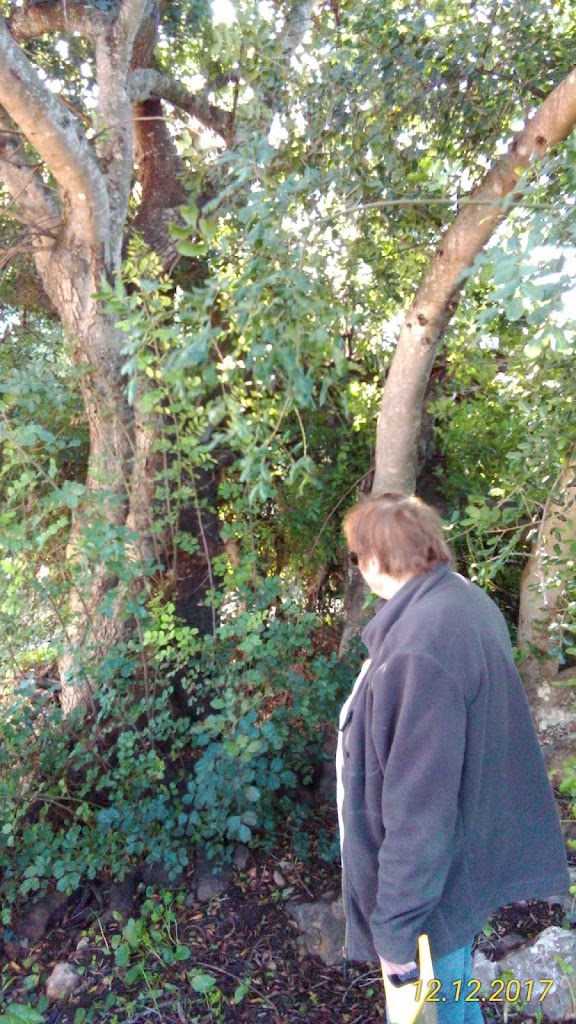
It was also shown that even badly damaged trees can regenerate very impressively as long as their roots remain intact. There were some beautiful examples of very old carob trees which had formed new trunks alongside rotted but still present old ones, or that had even formed a growth of several trees after the initial tree had fallen in a storm and the branches on the ground rooted and grew into new trees.
There was a discussion fuelled by the question if suckers from the base of a tree should be removed or not. From the point of view of the tree suckers mean regeneration so if the sake of the tree has priority these suckers should remain. But depending on human needs it might make sense to remove them but this may impair the lifespan of a tree. The motto was: What do YOU want, what does THE TREE want. The discussion also touched the point of suckers in grafted trees which are a different issue.
During a long personal discussion with the referee I raised the question on how and when to prune Olive and Almond trees. The referee replied that her studies mainly deal with north european trees but she would try to gather infomation on the requested species and send it by mail. She also said that her presentation will be translated into English and sent to Gerhard Zabel. The presentation was held in German and was simutaneously translated. This will of course be more detailed than this abstract. She also said that she would come back to Portugal next year to give a talk on more specific pruning techniques for specific trees.
Ulrich Urban